Dated readings to apportion service charges on actual consumption
Without a dated reading, no service charge can be apportioned on actual consumption. TSC Immo maintains the inventory of meters in your buildings and the readings that feed the statement.
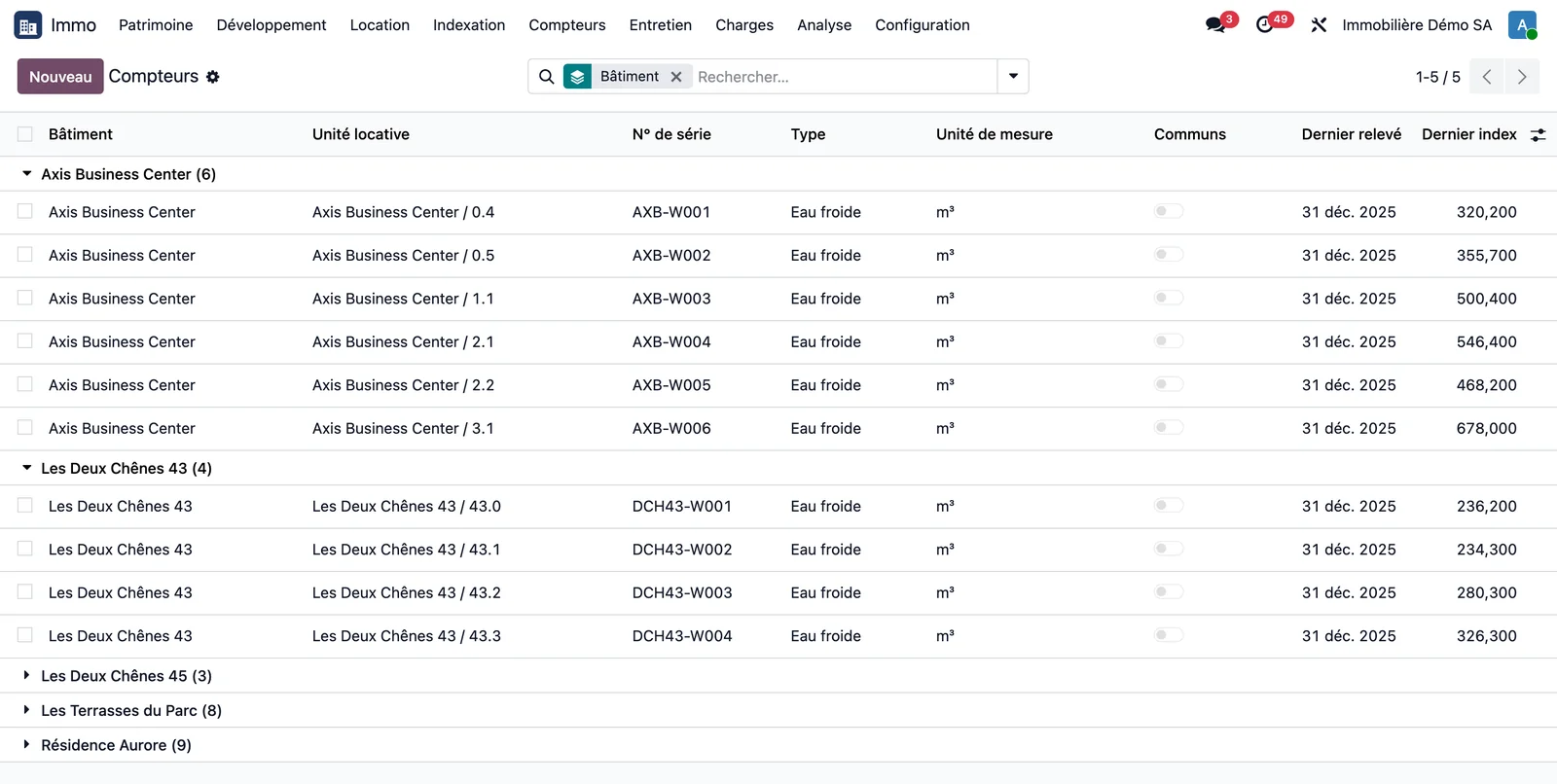
The meter portfolio
Private meters, linked to a unit, and common-area meters, linked to the building. Each meter has its type and its coefficient.
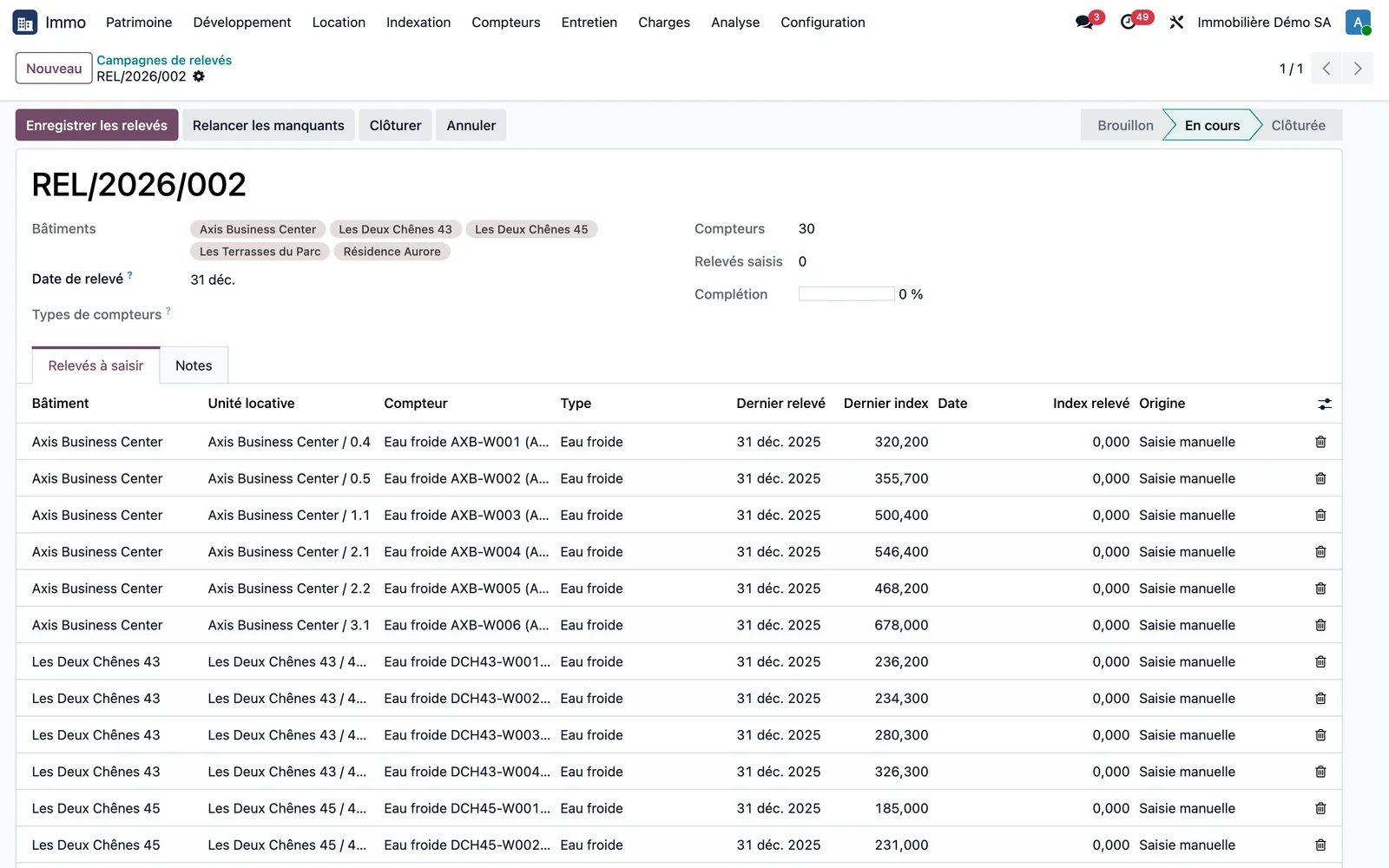
Reading campaigns
A campaign generates one line to complete per meter, with the previous index alongside. It tracks its completion rate, and a button schedules a reminder for the missing meters.
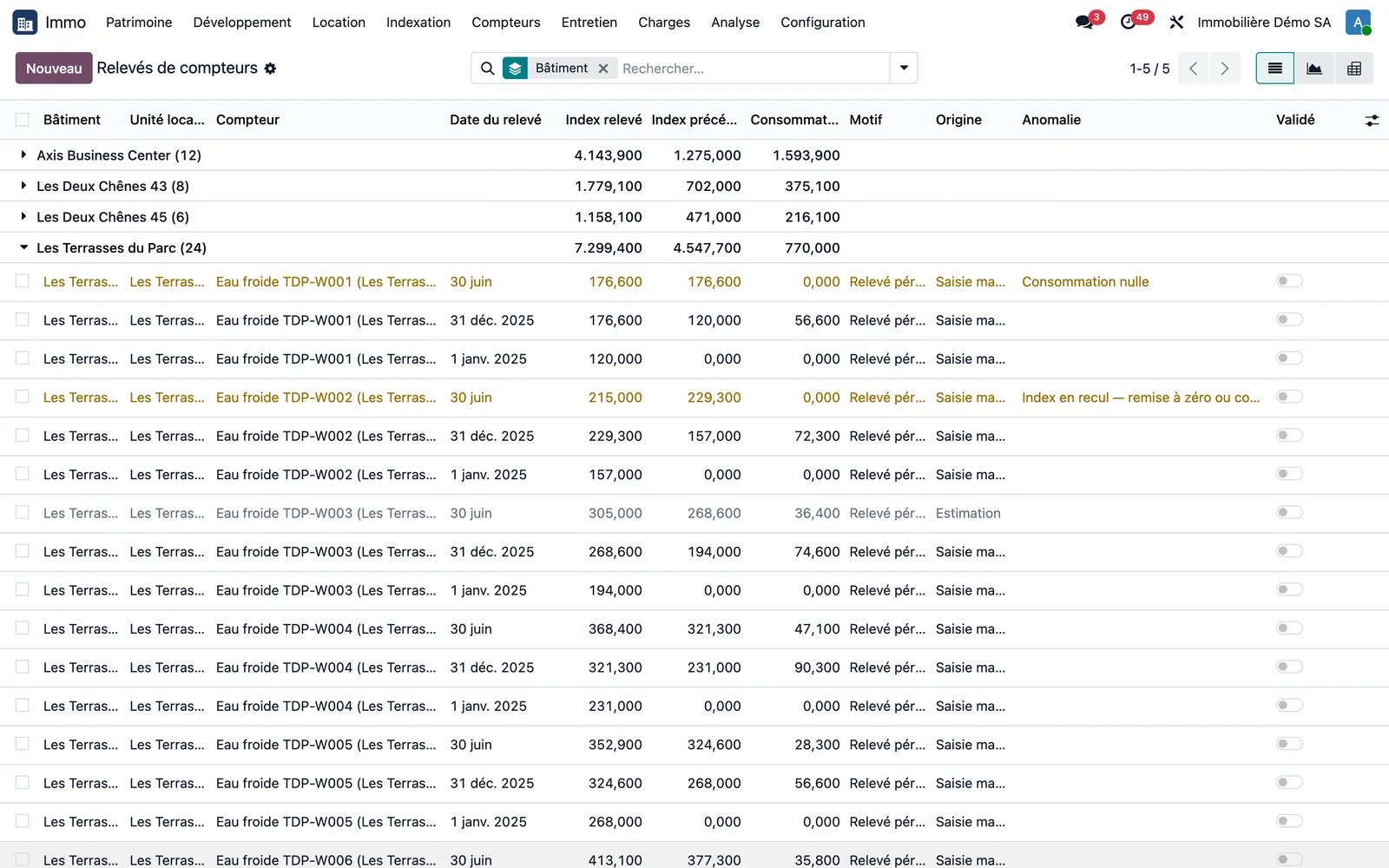
Reading anomalies are flagged
- An index that goes backwards or zero consumption is flagged as an anomaly.
- The reason for a reading indicates whether it is a periodic reading, a tenant move-in, a tenant move-out or a meter replacement.
- If a reading is missing at the date of a statement, the consumption is interpolated from the readings either side of it and marked as estimated. It is never silently reset to zero.
From reading to statement
A type of service charge apportioned on consumption (water, heating) uses the readings of the period directly: each unit pays in proportion to what it has consumed. When a unit changes occupant during the period, its consumption is split between the successive occupants in proportion to the days of occupancy.
On the roadmap, undated: the import of reading files from metering service providers.
See TSC Immo on your own cases
A demonstration on a database with fictitious data, then on your own management questions.
 Connect. Transform. Grow.