Rent indexation to the health index in Odoo
Every year, every lease: find the starting index, the right base, the new index, calculate, notify the tenant, change the invoicing. TSC Immo does the calculation, you keep the decision.
Multi-base indices linked by coefficients
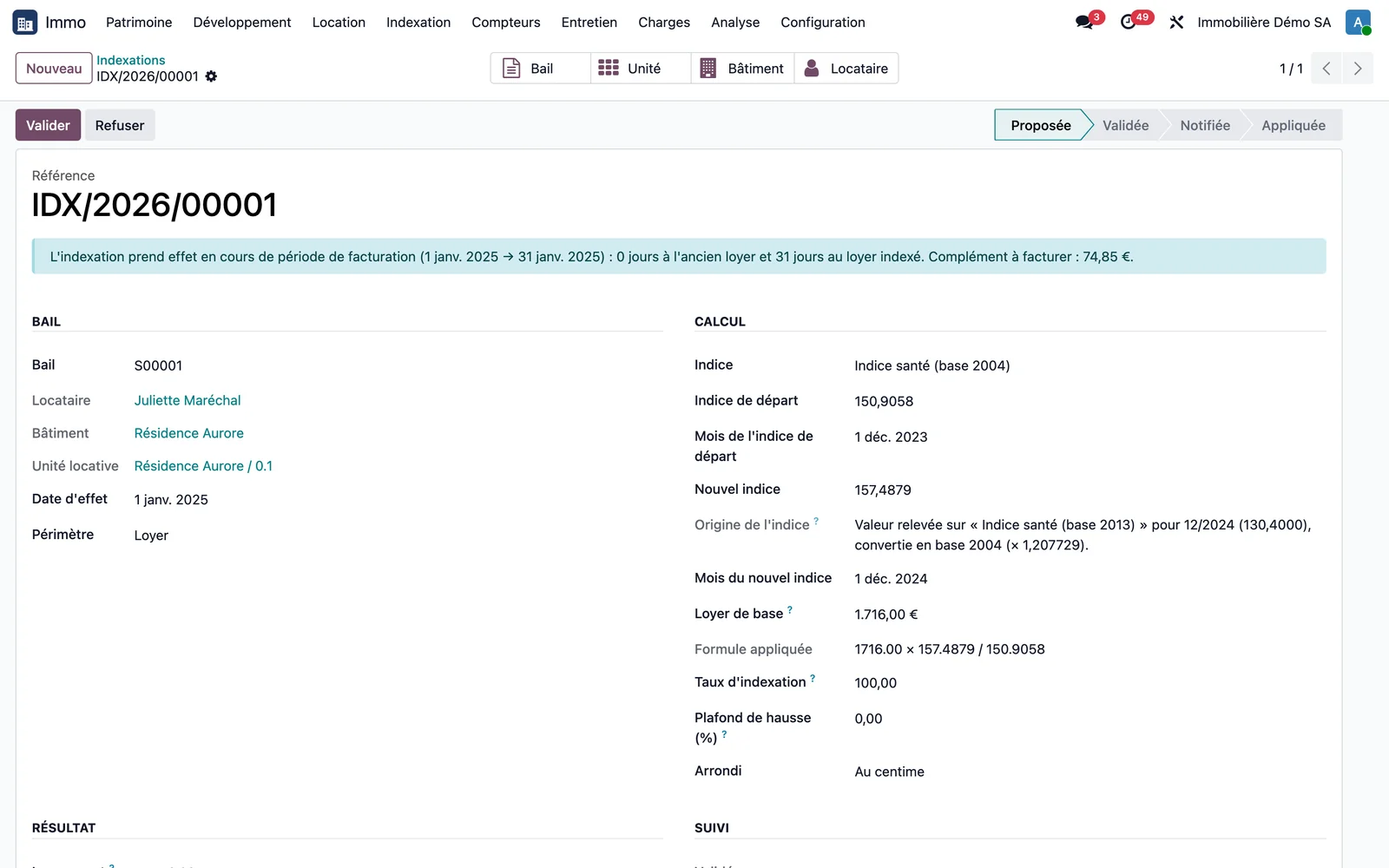
The engine relies on an index table: health index, consumer price index, ABEX, each with its base year. Five bases of the health index are supplied (1988, 1996, 2004, 2013 and 2025), linked by the conversion coefficients published by Statbel. A lease signed on the 2004 base keeps its base for its whole life: when the value is missing from its series, the engine reads it from the linked series and converts it. The proposal then states the series read, the month and the coefficient applied.
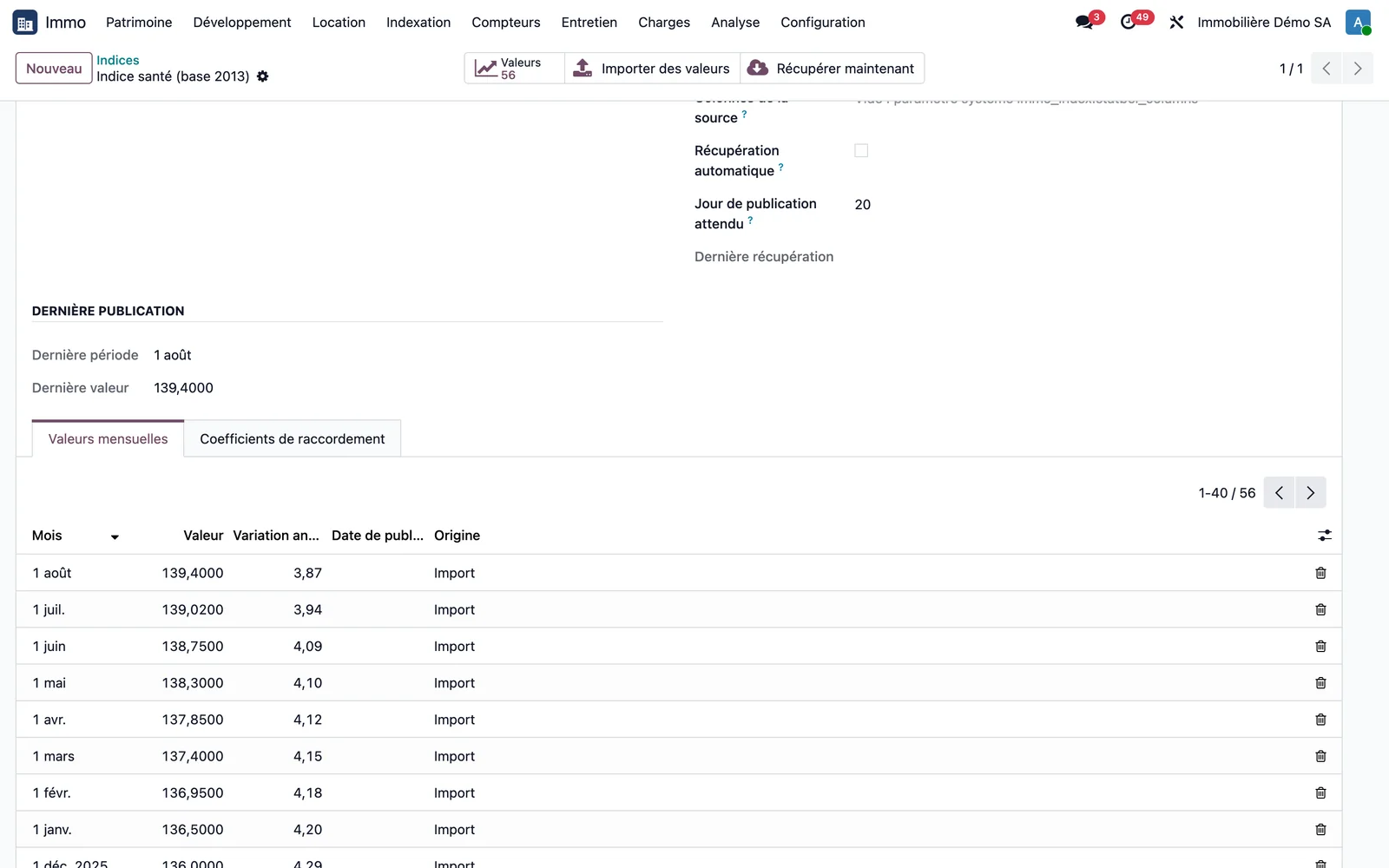
Index values no longer need to be entered by hand
- Automatic retrieval from Statbel's open file, once the scheduled action is activated: only missing months are written, a published value is never replaced, and discrepancies are flagged.
- Manual retrieval using the "Fetch now" button on the series record.
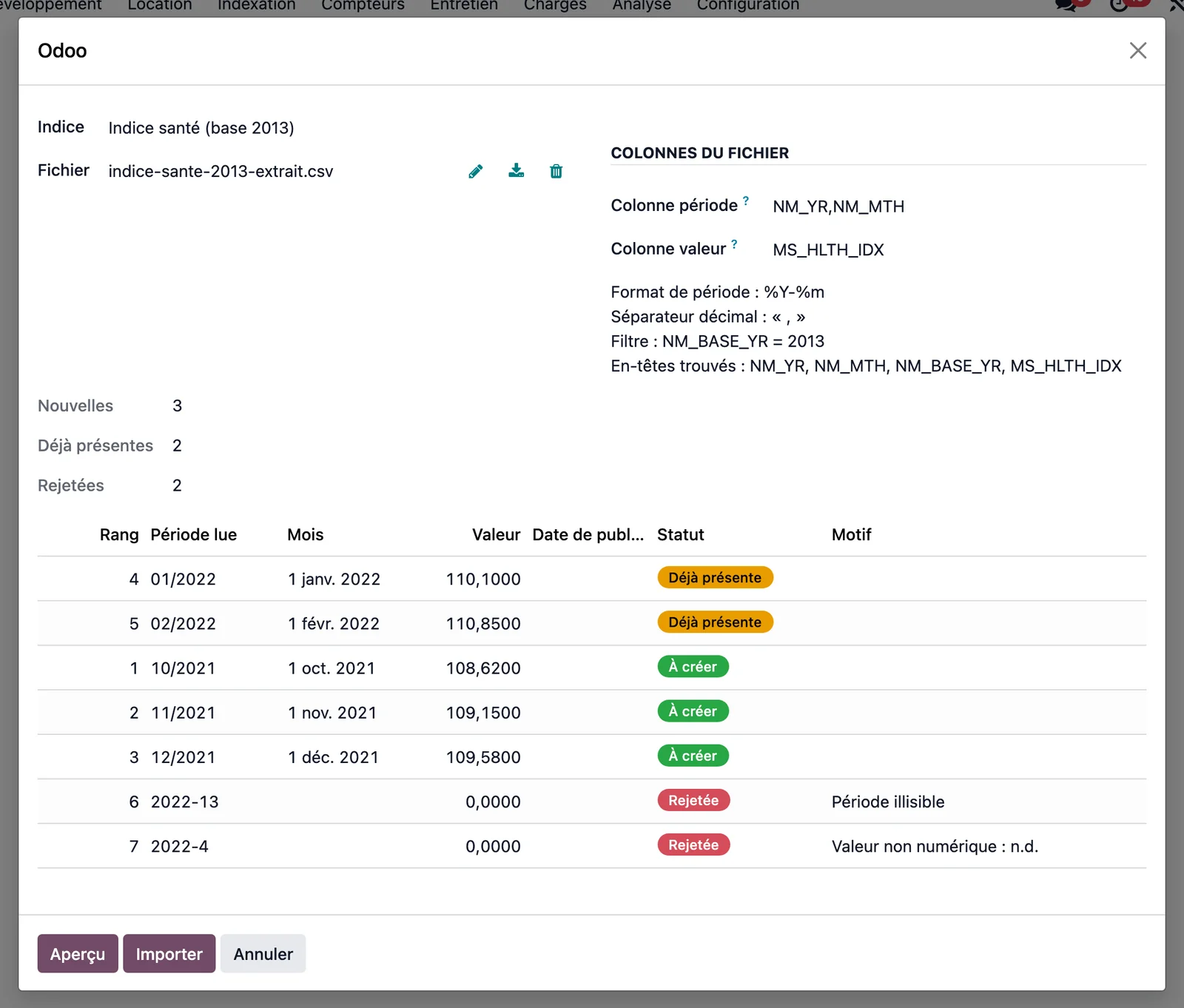
- File import in CSV, XLS, XLSX or ODS format for loading historical data, with a preview that classifies each line as new, already present or rejected.
Two safeguards run before any network call: the base of the series must match that of the file read, and so must the indicator (health index versus consumer price index). A series on the 2004 base fed with 2013-base values would undervalue every indexed rent without anything showing: the retrieval refuses and says so. Once the scheduled check is activated, if an expected value is not published on the due date, a task names the missing month and closes itself when the value arrives.
A calculation visible on every indexation
Base rent multiplied by the new index, divided by the starting index. The partial rate and the cap on increases are set per lease, and the rounding rule on each indexation. A wizard generates in bulk the indexations due on the anniversary date, and a scheduled action can do so every day once activated.
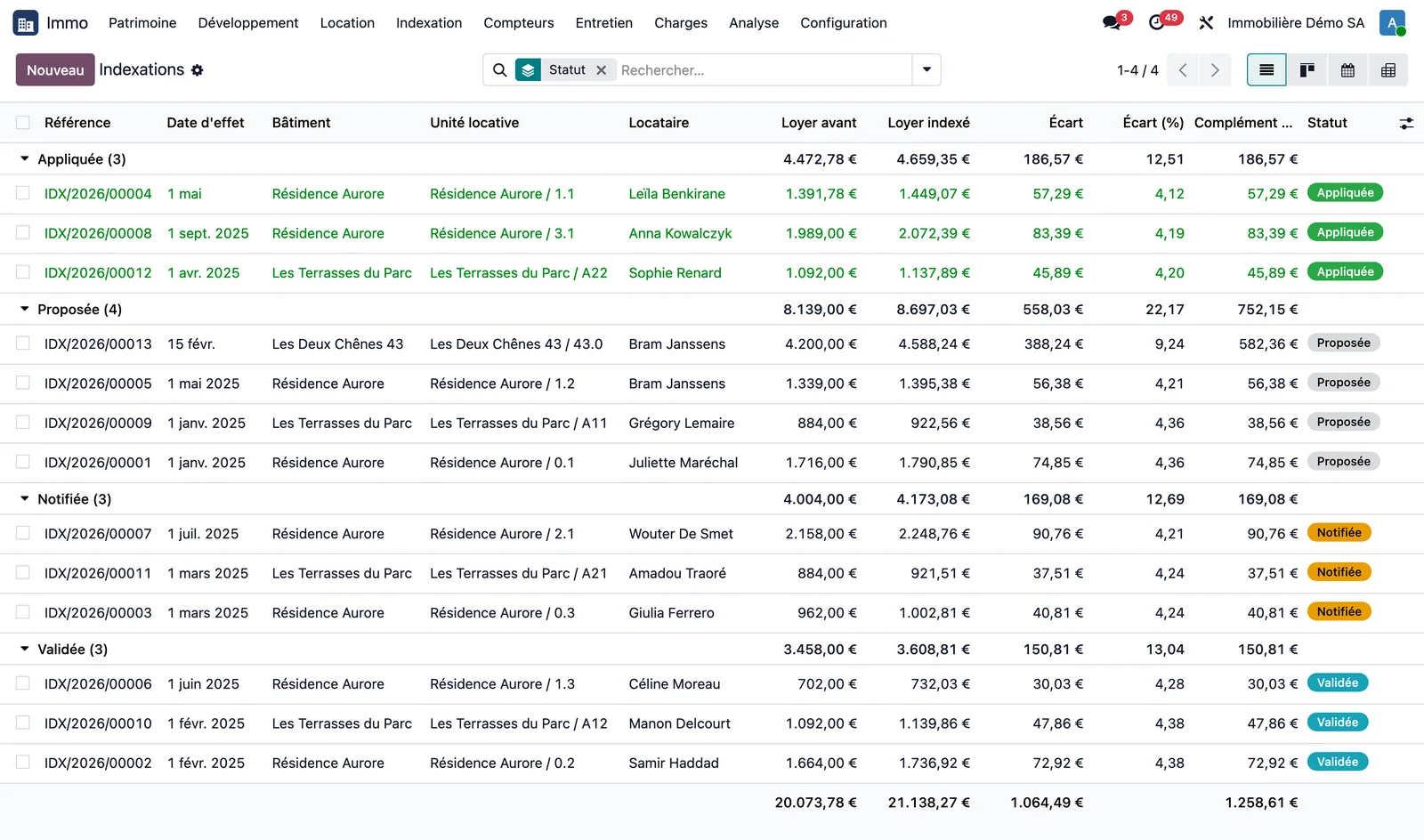
Four steps before a rent changes
Proposed, validated, notified, applied. Applying it updates the lease's recurring line without touching invoices already issued. Once activated, a weekly reminder flags indexations that are validated but not yet notified.
Proration within a period
When the indexation takes effect part-way through a month or quarter that has already been invoiced, the period is split: days at the old rent, days at the new rent, and the top-up to invoice.
The notice to the tenant
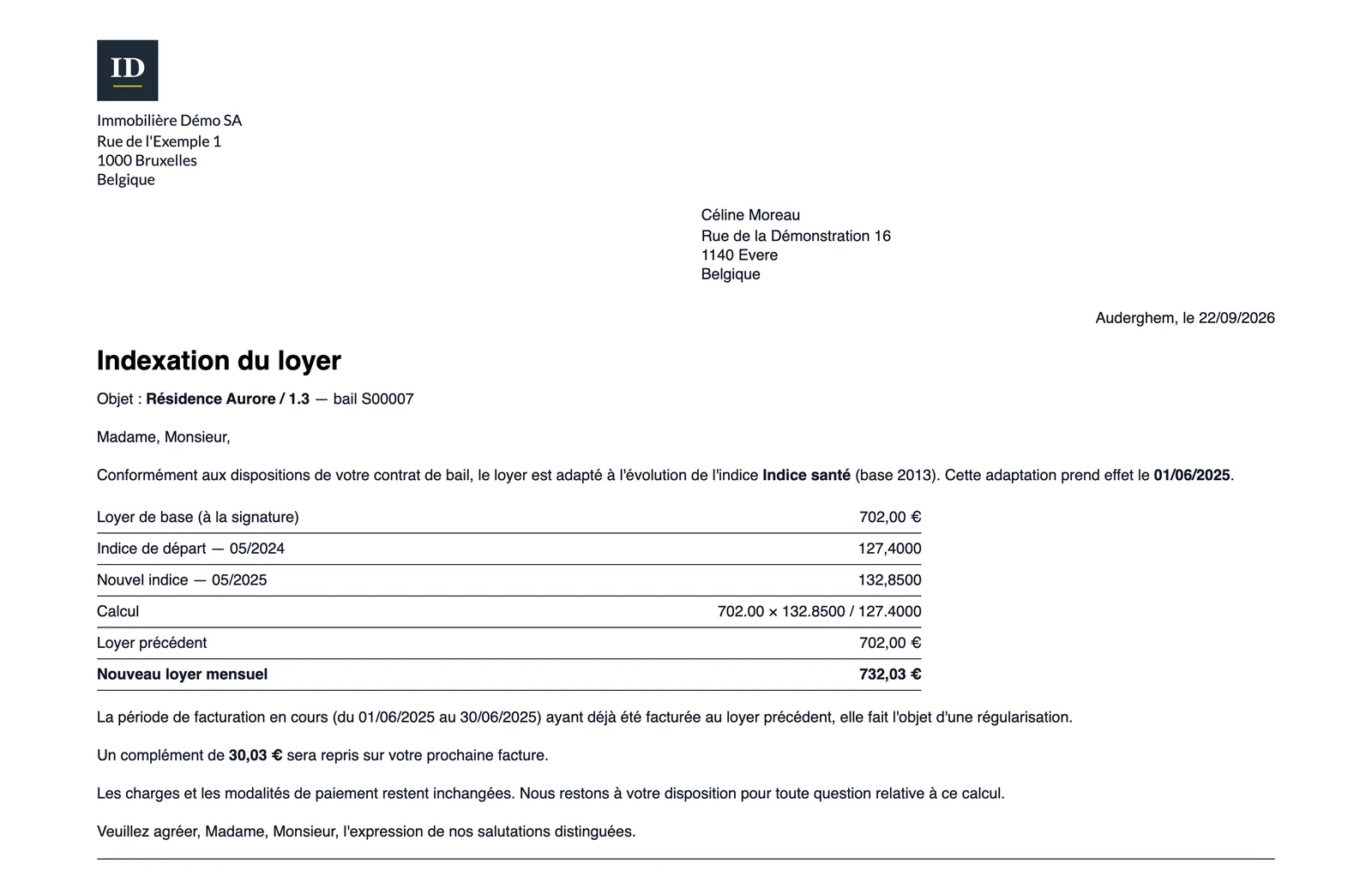
The indexation notice states the base rent, the starting index and its date, the new index and its date, the formula, the new rent, the effective date and any top-up. It is sent by email, individually or in bulk from the list.
Simulate before deciding
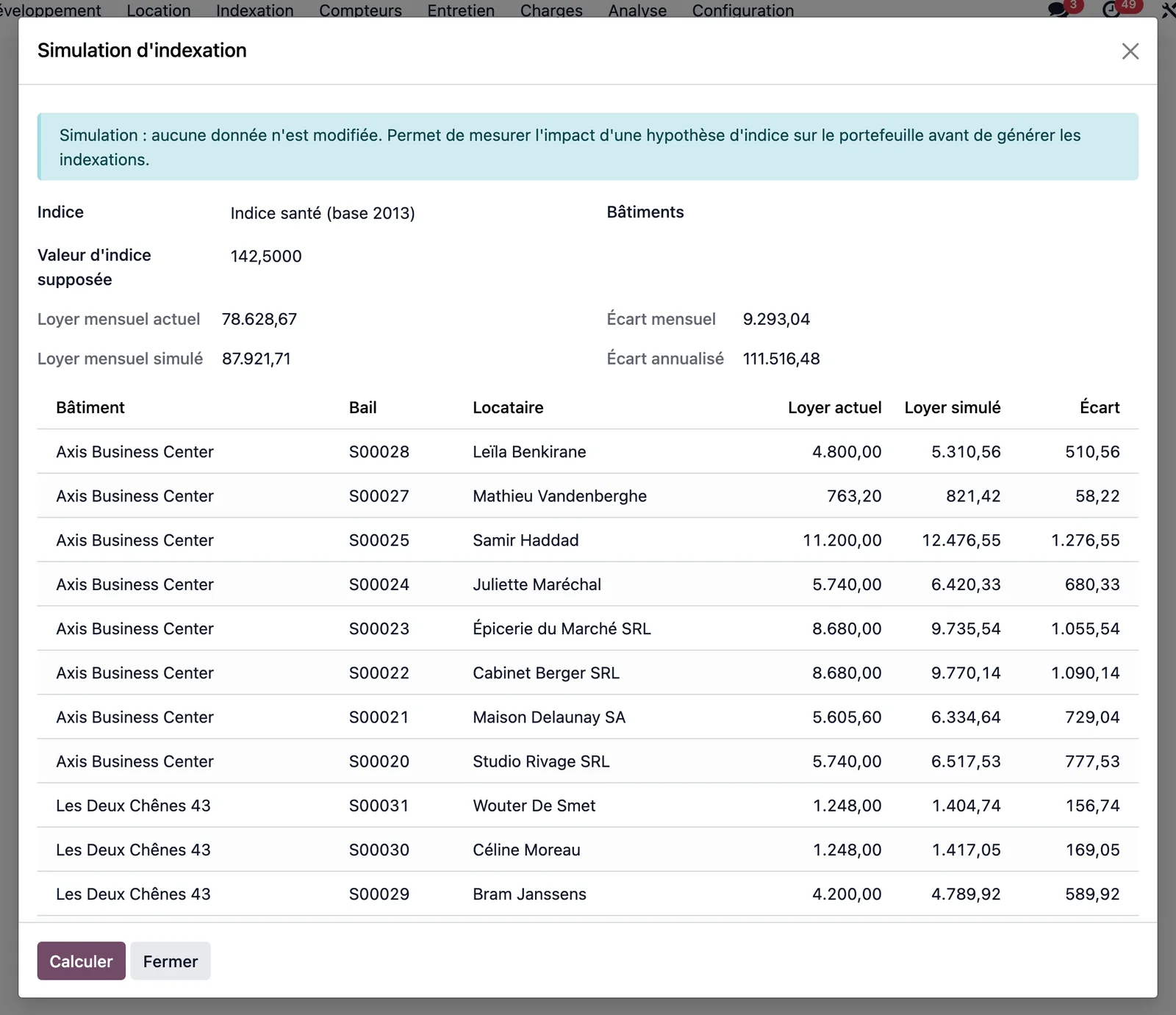
The simulation wizard applies an assumed index value to the whole portfolio, optionally limited to certain buildings, without changing anything: useful for preparing a budget or answering a tenant.
The formula displayed in plain text on the lease
On the lease record, a box writes out the formula with the values actually read: base rent, starting index and its month, current index and its month. The lease signature date, distinct from the start date, fixes the starting index at the month preceding it. A lease without a signature date is not indexed, and the reason for refusal names the field to correct. A rent-free period, a rent step increase or a commercial incentive (free months, reduced rents on a gradual ramp-up) never alter this base rent: indexation continues to apply to the full contractual rent. See rent steps and rent-free periods.
The Edit button opens six parameters (index series, starting index, month of the current index, indexation date, base rent, frequency). Each stays on the legal rule until it is activated, and the formula is rewritten as it is adjusted.
With each indexation applied, each rental deposit on the lease is revised at the same ratio: the one still to be provided is raised, the one already provided remains untouched and the top-up is claimed from the tenant through an activity assigned to the property manager. Example on the demonstration database: an office signed on 20 August 2025 for entry on 1 October 2025 starts from the July 2025 health index (133.75); indexed on 1 October 2026, its rent goes to 850.00 × 139.80 / 133.75 = €888.45, and its bank guarantee of €1,700.00 already provided becomes €1,776.90 due, i.e. €76.90 to claim.
See TSC Immo on your own cases
A demonstration on a database with fictitious data, then on your own management questions.
 Connect. Transform. Grow.