The multi-key service charge statement calculated in Odoo
This is the core of TSC Immo, and what most property managers still handle on a spreadsheet. The statement starts from the vendor bills posted in Odoo and ends with an invoice or a credit note per tenant.
Qualify the service charge at data entry
A vendor bill line becomes a recoverable service charge as soon as it is entered: service charge type, building or site, unit for a private cost, period covered. For a known maintenance contract, the type is suggested automatically.
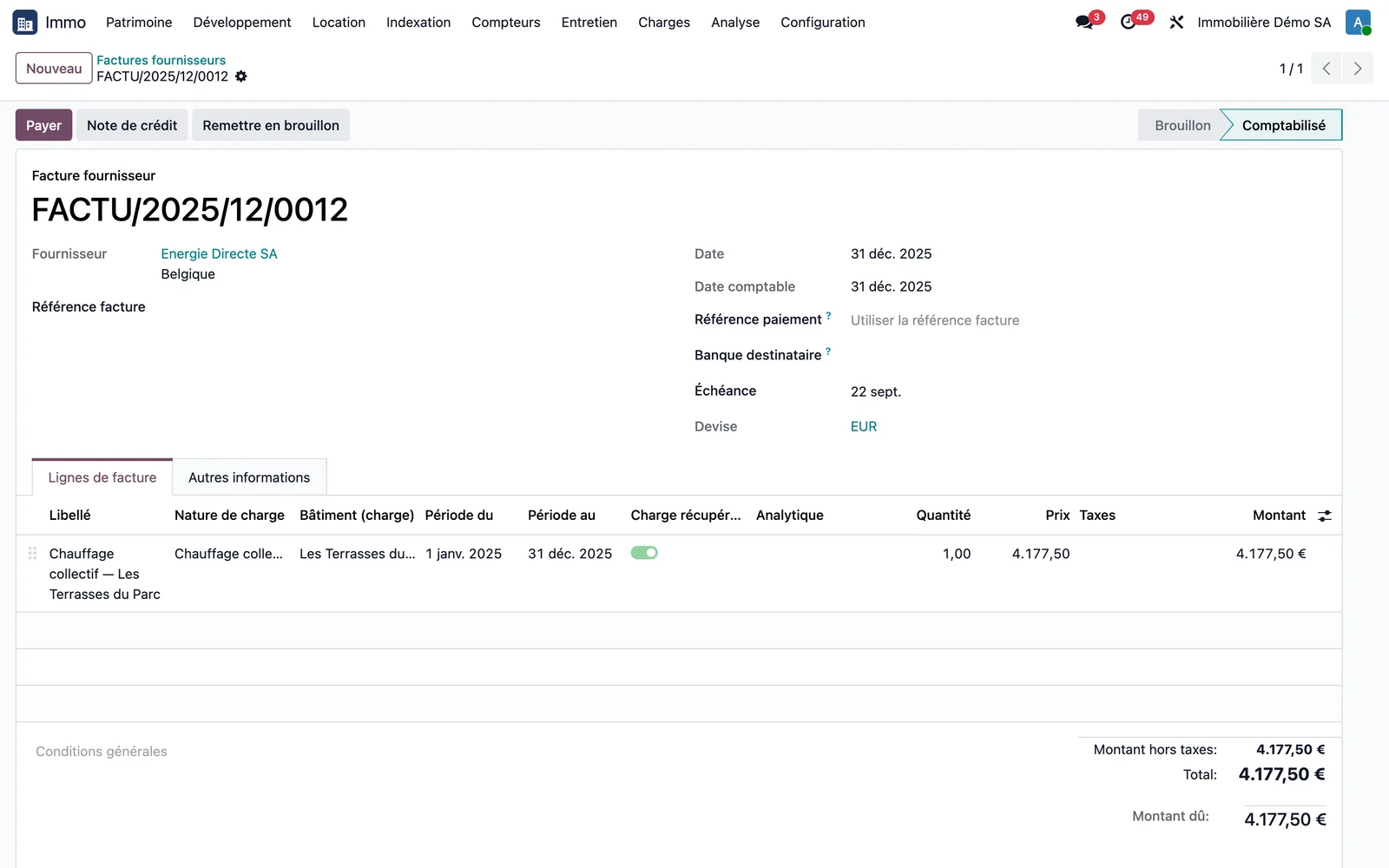
Six allocation mechanisms
- Pro rata temporis for a service charge that exceeds the period: an annual premium only weighs on the months covered.
- Multi-key: each service charge type goes through its own key, heating through the heating key of the building concerned.
- Two levels: the service charges of a site are allocated between its buildings, then between the units of each.
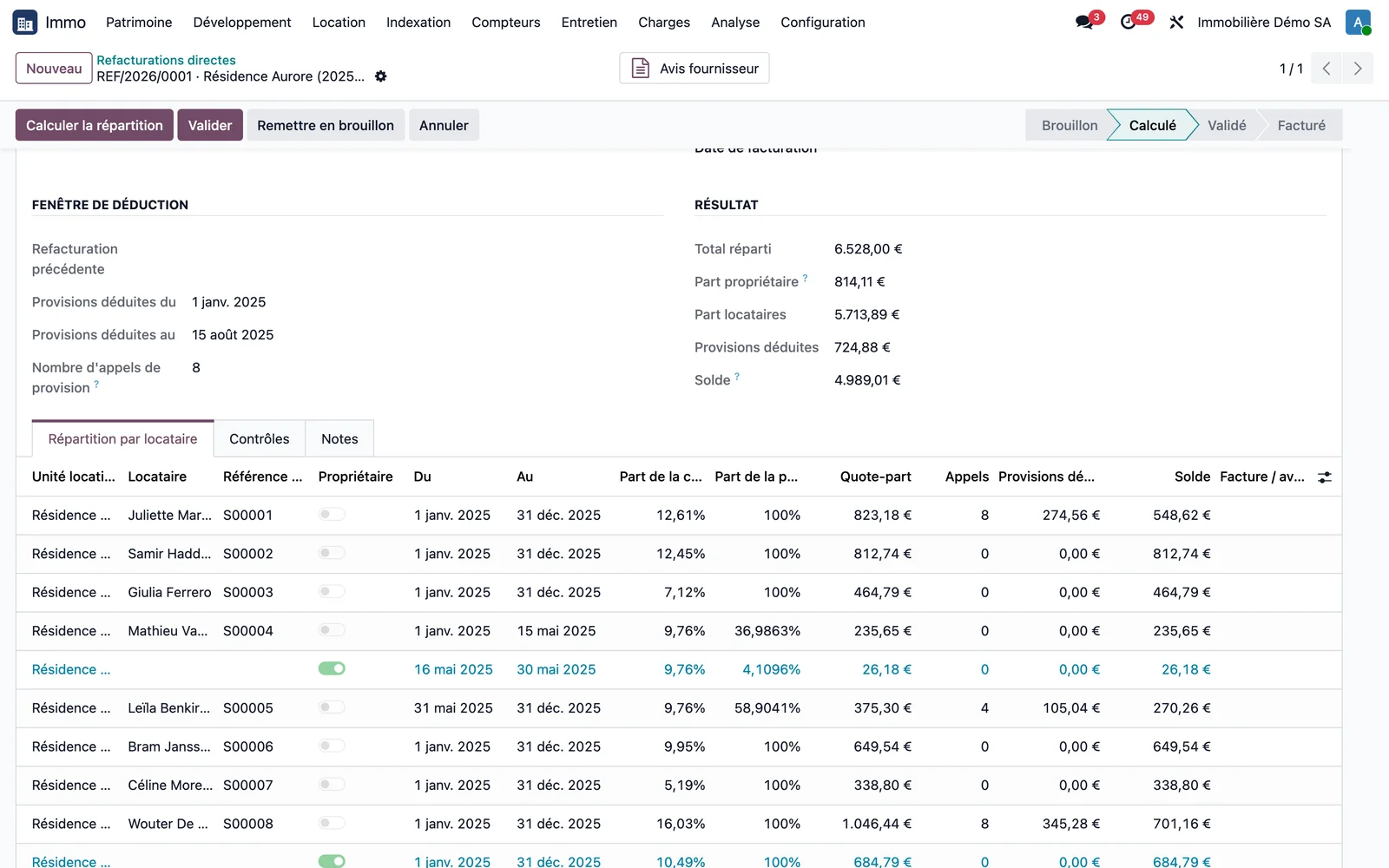
- Pro rata by occupant: a unit's share is split between outgoing tenant, vacancy and incoming tenant. Vacancy stays with the owner.
- Metered consumption for the service charge types concerned.
- Private costs charged 100% to a single unit.
The statement and its control screen
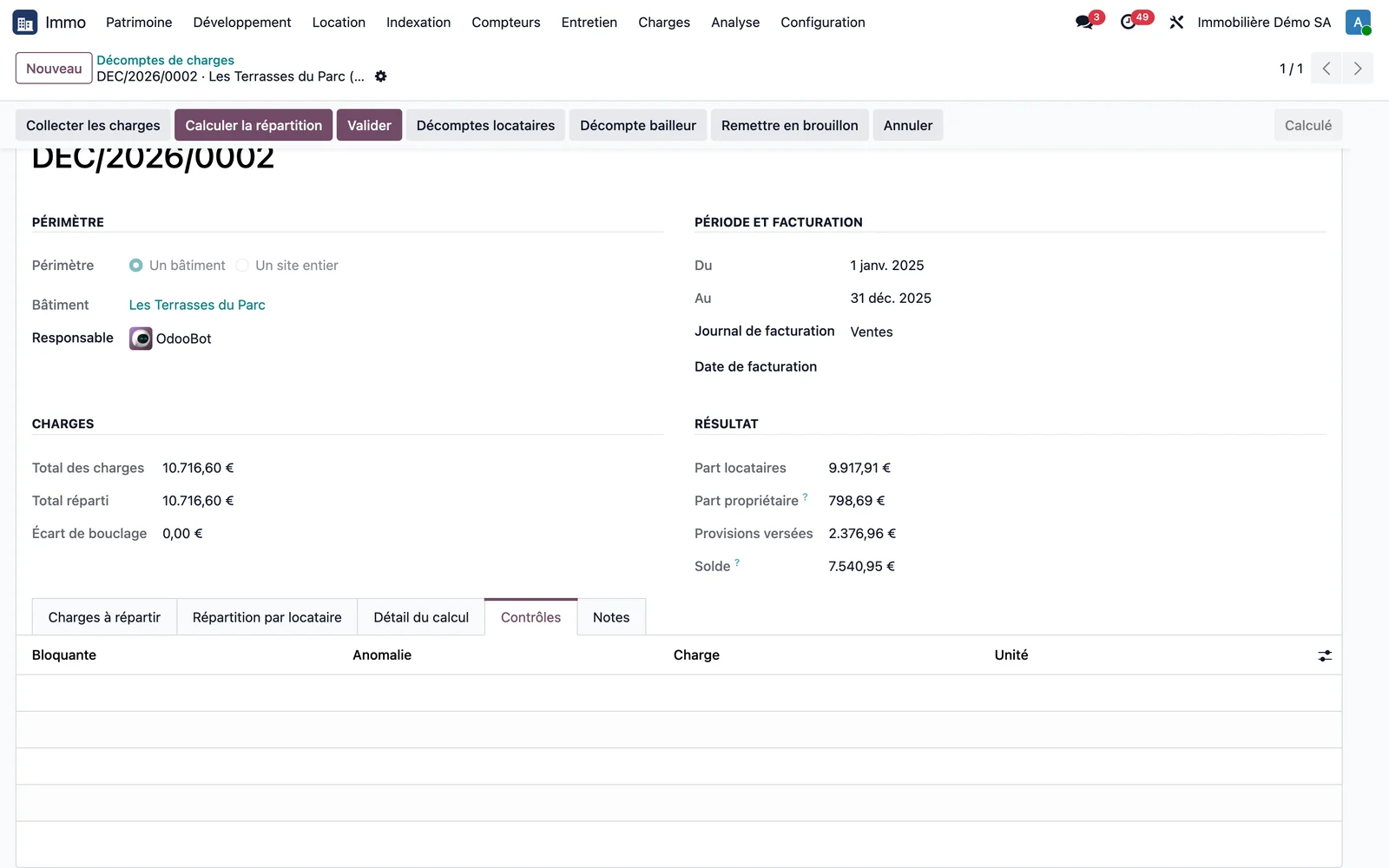
A wizard generates statements by year, half-year or quarter. The statement collects the service charges, calculates the allocation, deducts the service charge advances made in proportion to the period covered, then invoices. The total allocated must equal the service charges collected. Blocking anomalies, such as a key that allocates more than it declares or a service charge without a type, prevent approval.
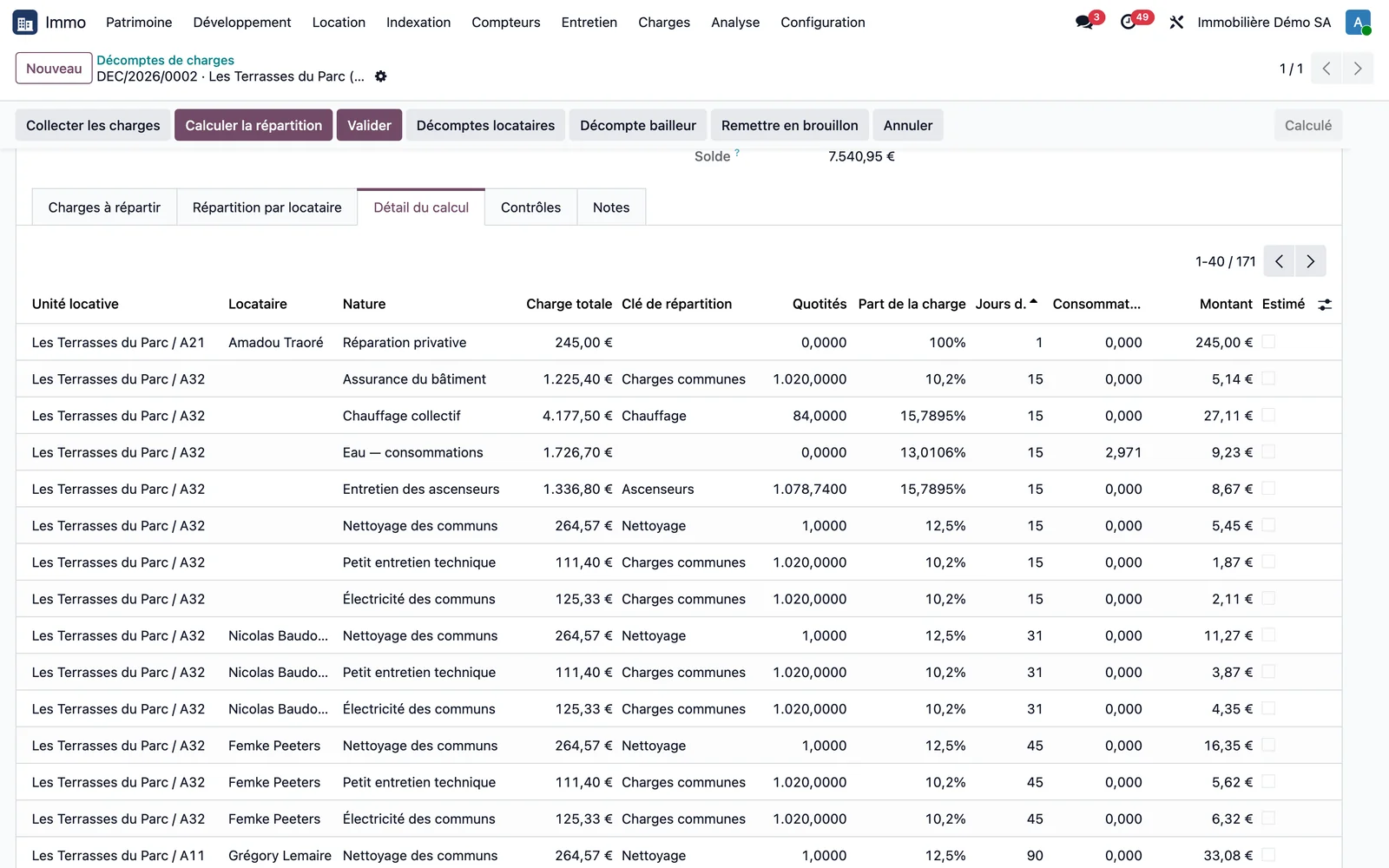
Each amount is justified line by line: service charge type, key, share, days of occupancy, consumption, amount due. A disputed statement can be defended by tracing back to the original vendor bill.
The document given to the tenant
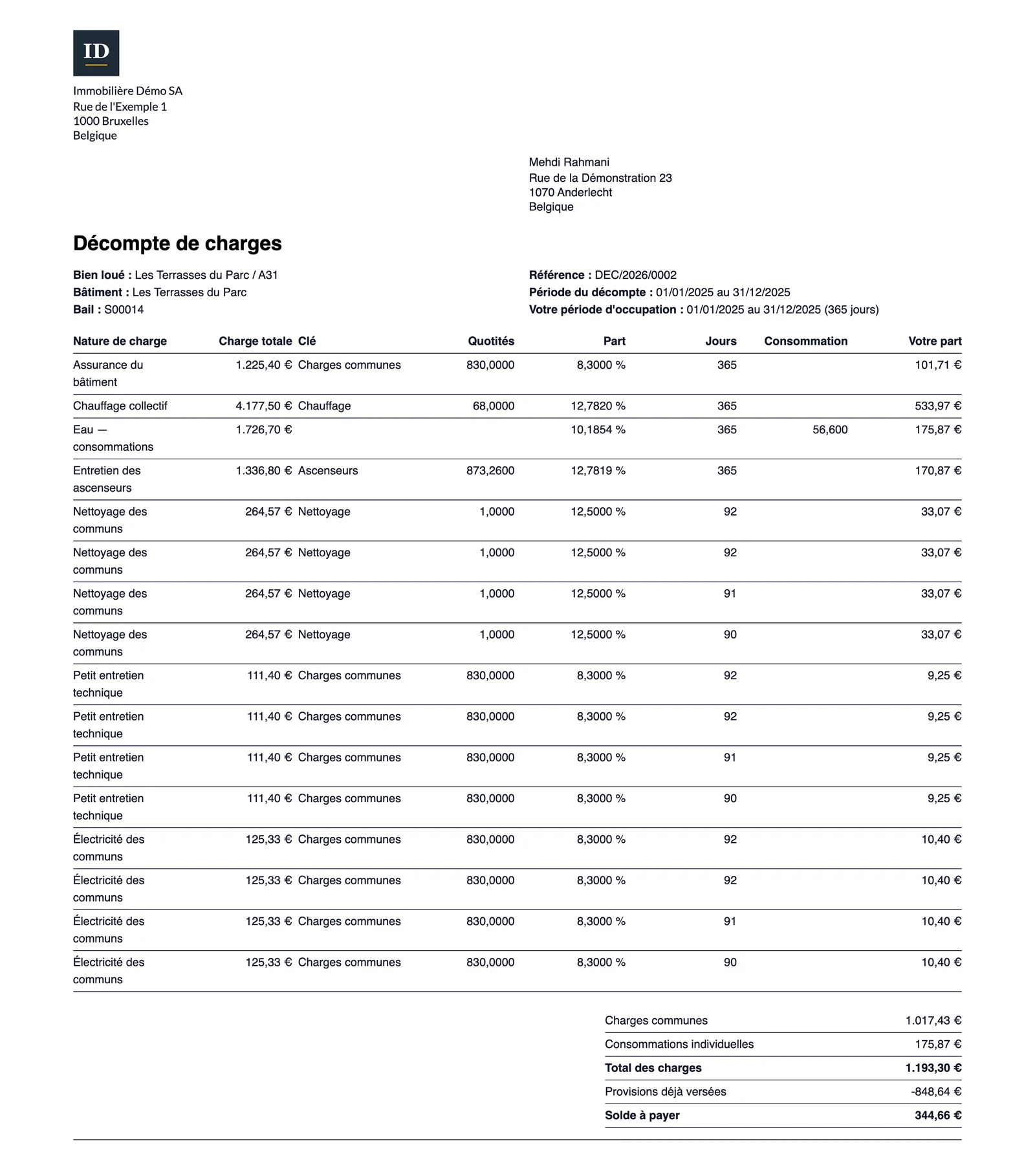
The tenant statement presents each service charge type with the total amount, the key, the share, the portion, the days of occupancy, the consumption and the amount due, then the balance after deduction of service charge advances. A global landlord statement reads the same service charges from the owner's point of view: the share recovered and the share left to the owner.
Service charge advances
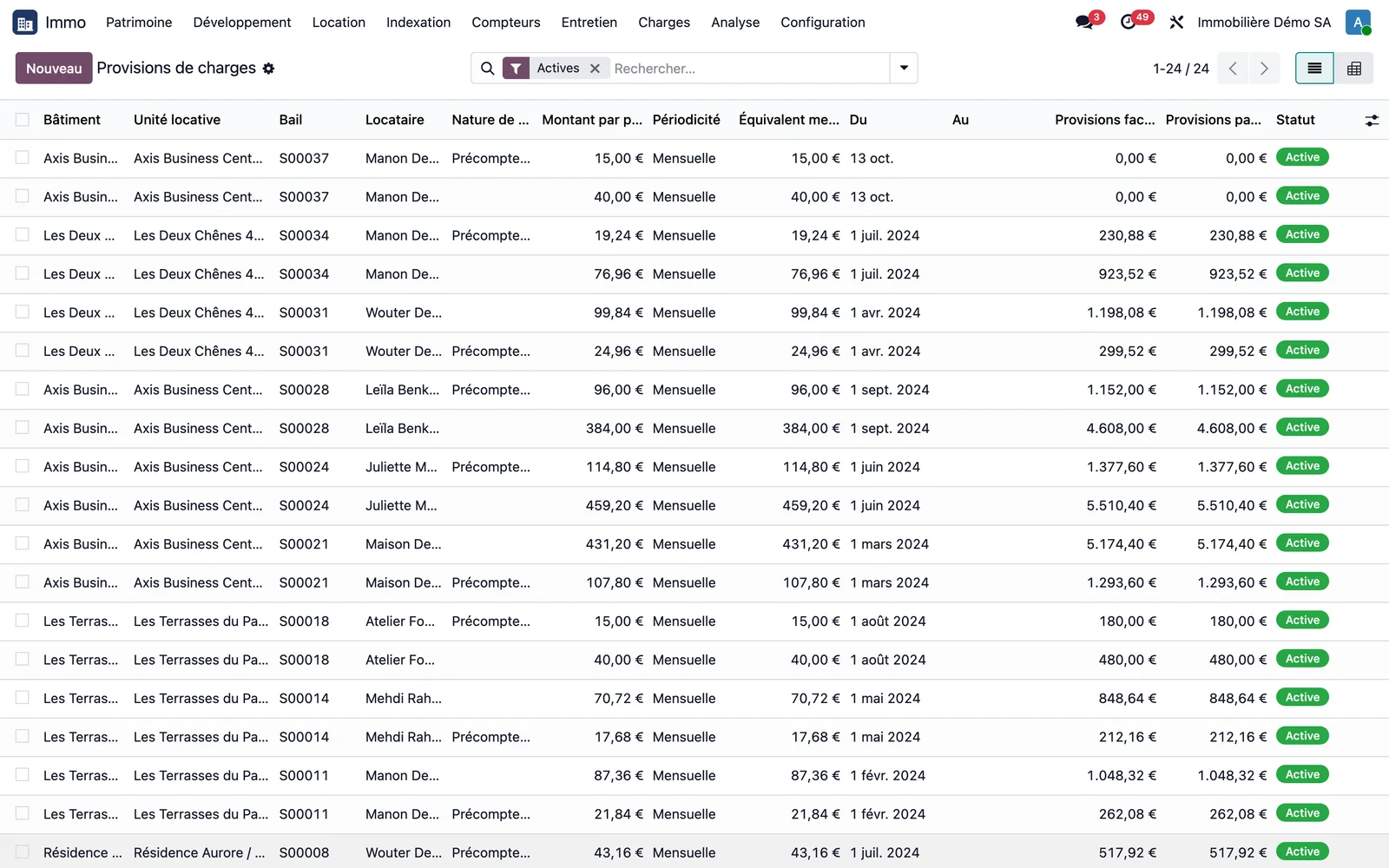
Service charge advances are called through the lease's recurring invoicing, one line per service charge type if needed. Only the tenants concerned pay them. A monthly scheduled task, delivered inactive, compares the service charge advances called with the service charges incurred and, beyond a 15% difference, records a review recommendation in the service charge advance's history.
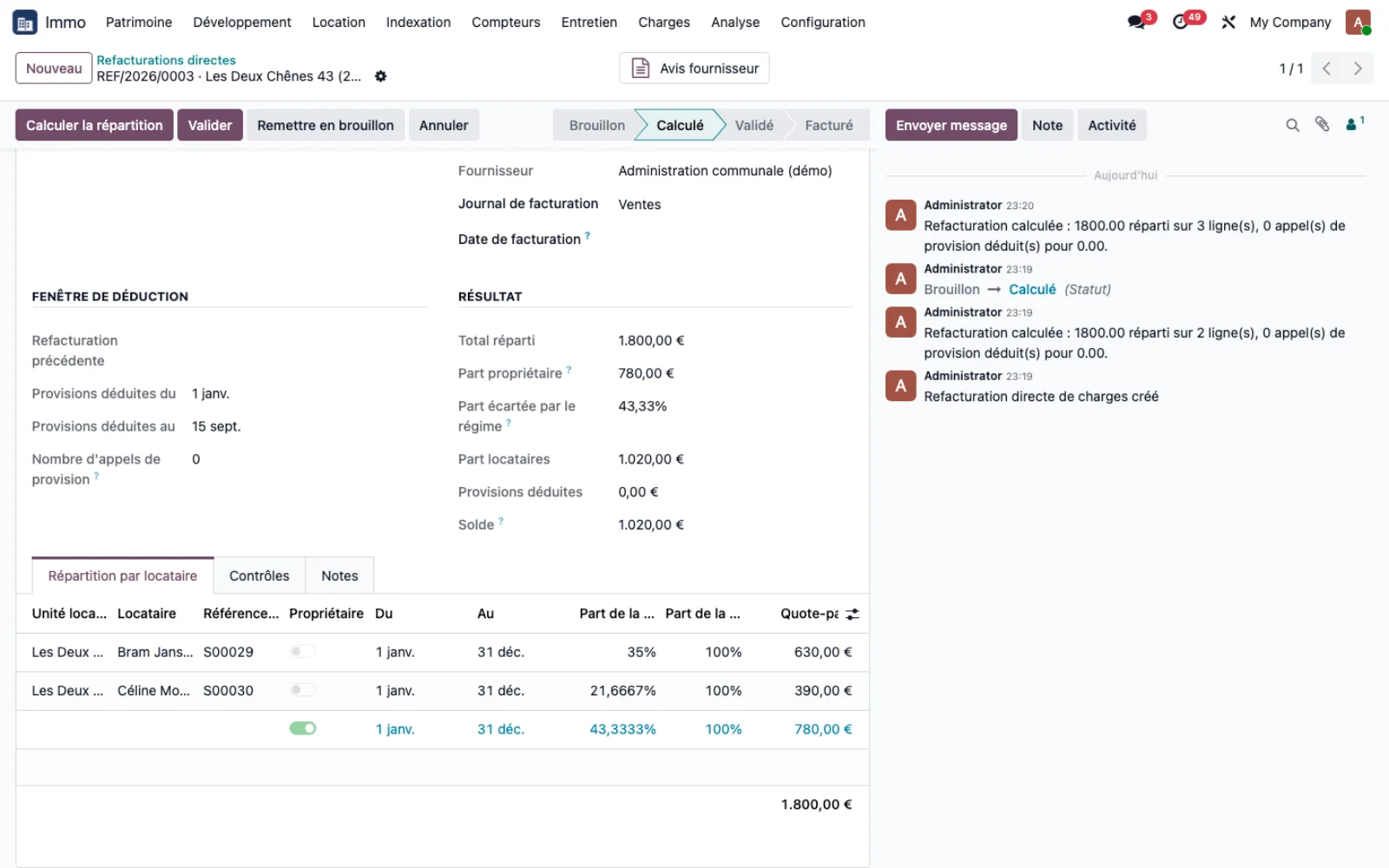
Direct recharge of property tax
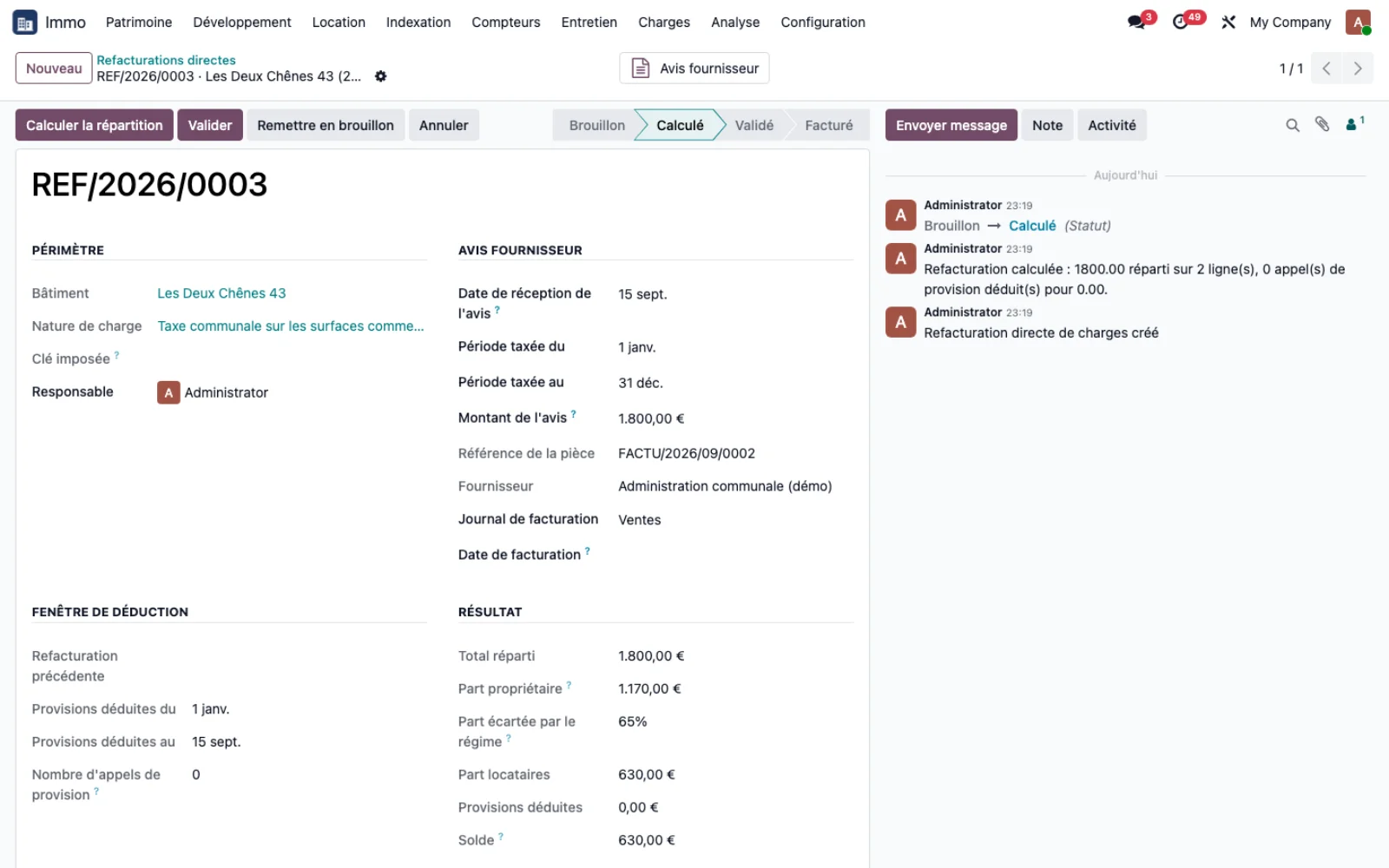
Property tax does not wait for the annual closing. On the posted vendor bill, the “Recharge to tenants” button allocates the assessment notice according to the key, splits the share between successive occupants, leaves vacancy with the owner and deducts the service charge advances called since the previous notice, each call being counted only once over the life of the lease. A service charge recharged in this way is never picked up again by a periodic statement.
Management fees
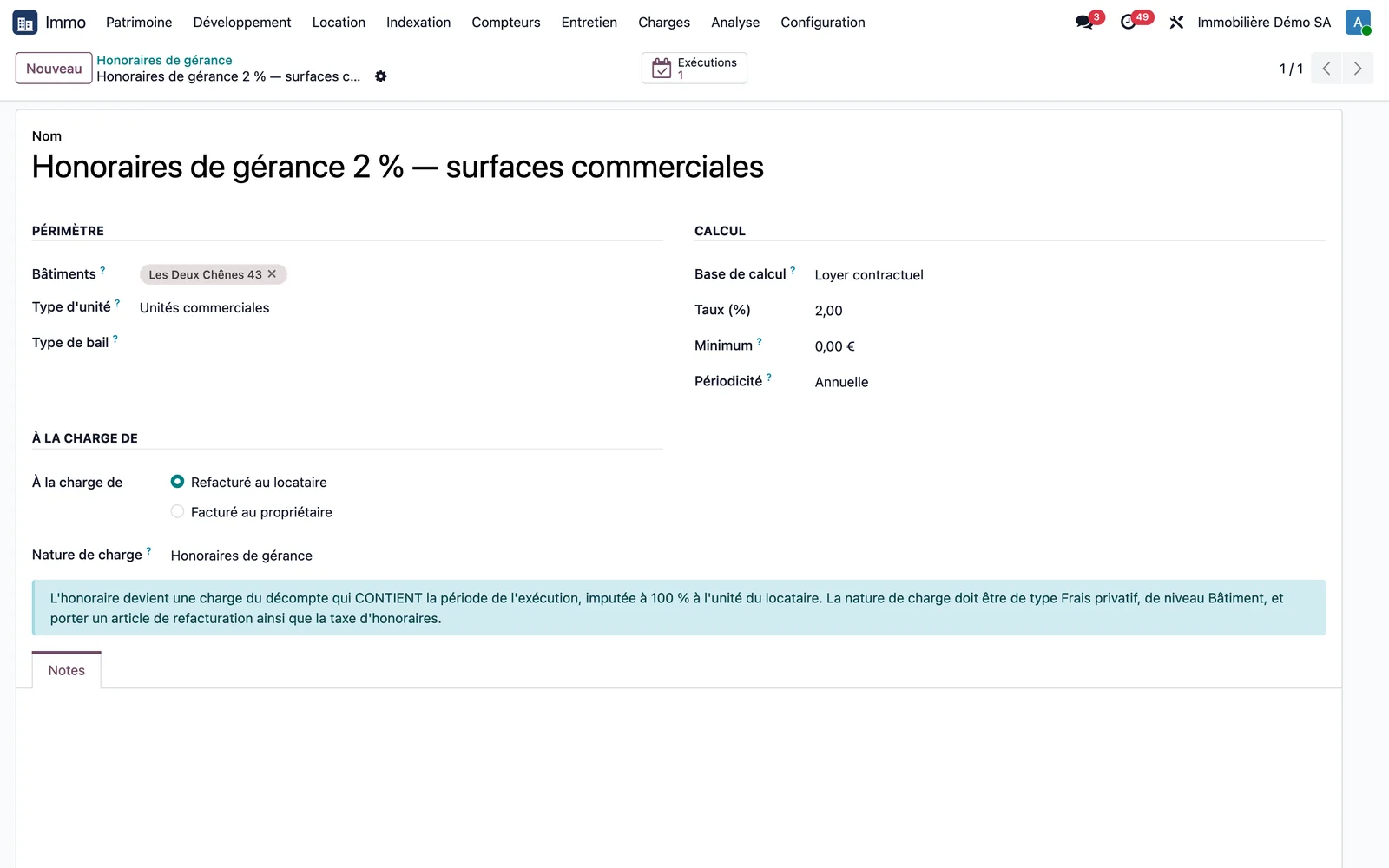
A management fee rule carries the mandate: scope (buildings, unit type, lease type), basis (rent invoiced, applicable contractual rent or allocated service charges), rate or fixed amount, minimum, frequency, and who bears it. On the tenant side, the management fee becomes a line of their statement. On the owner side, it becomes an invoice from the property management company to the owning company, with the building's analytic accounting.
Owner and property management in the same Odoo
The service charge type states in which company's books the invoice is entered: the property management company, the building's owner or a designated company. The statement picks up these service charges from the books of each paying company. Inter-company recharging is available as an option, switched off by default.
Mixed-use buildings: reserving a service charge for shops
In a building that mixes a shop on the ground floor with flats on the upper floors, a service charge type states once and for all whether it applies to commercial or residential units: property tax and certain municipal taxes only apply to business tenants. The lease can also impose its own regime, independently of the unit type. The share of the excluded units goes back to the owner, never passed on to the other tenants, and a non-blocking check warns when more than 50% of the notice is left with the owner.
See TSC Immo on your own cases
A demonstration on a database with fictitious data, then on your own management questions.
 Connect. Transform. Grow.